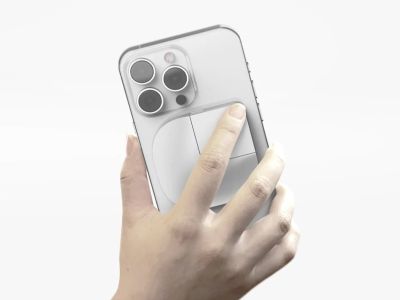
Designer Geontak Oh introduced the Poinf concept device, which solves one of the main problems of large smartphones is the difficulty of using it with one hand.
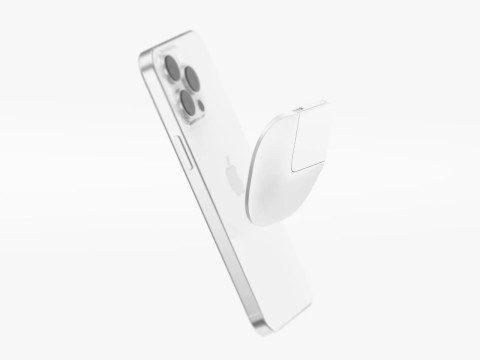
Poinf attaches to the back panel smartphone using MagSafe or other magnetic technology and connects via Bluetooth. The device has a touchpad on the front panel and a physical key for gesture recognition and presses, and control is carried out using the index and middle Fingers. As in the case of a regular computer mouse, the cursor.
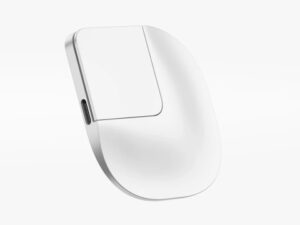
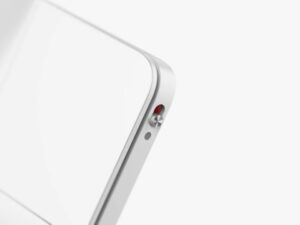
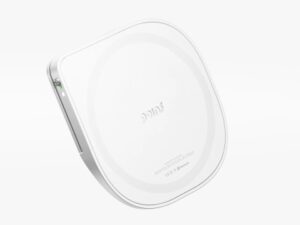
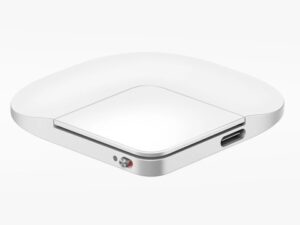
Such a decision is definitely will make controlling large smartphones with one hand more convenient. However, the exact Moving the cursor from item to item on the screen for the first time may seem unusual and perhaps not even as fast as if you worked with smartphone with two hands.
smartphone, mobile telephone with a display screen (typically a liquid crystal display, or LCD), built-in personal information management programs (such as an electronic calendar and address book)), and an operating system (OS) that allows other computer software to be installed for Web browsing, email, music, video, and other applications. A smartphone may be thought of as a handheld computer integrated within a mobile telephone.
The first smartphone was designed by IBM and sold by BellSouth (formerly part of the AT&T Corporation) in 1993. It included a touchscreen interface for accessing its calendar, address book, calculator, and other functions. As the market matured and solid-state computer memory and integrated circuits became less expensive over the following decade, smartphones became more computer-like, and more advanced services, such as Internet access, became possible.
Advanced services became ubiquitous with the introduction of the so-called third generation (3G) mobile phone networks in 2001. Before 3G, most mobile phones could send and receive data at a rate sufficient for telephone calls and text messages. Using 3G, communication takes place at bit-rates high enough for sending and receiving photographs, video clips, music files, e-mails, and more. Most smartphone manufacturers license an operating system, such as Microsoft Corporation’s Windows Mobile OS, Symbian OS, Google’s Android OS, or Palm OS. Research in Motion’s BlackBerry and Apple Inc.’s iPhone have their own proprietary systems.
It contains either a keyboard integrated with the telephone number pad or a standard “QWERTY” keyboard for text messaging, e-mailing, and using Web browsers. “Virtual” keyboards can be integrated into a touch-screen design. Smartphones often have a built-in camera for recording and transmitting photographs and short videos. In addition, many smartphones can access Wi-Fi “hot spots” so that users can access VoIP (voice over Internet protocol) rather than pay cellular telephone transmission fees.
The growing capabilities of handheld devices and transmission protocols have enabled a growing number of inventive and fanciful applications—for instance, “augmented reality,” in which a smartphone’s global positioning system (GPS) location chip can be used to overlay the phone’s camera view of a street scene with local tidbits of information, such as the identity of stores, points of interest, or real estate listings.
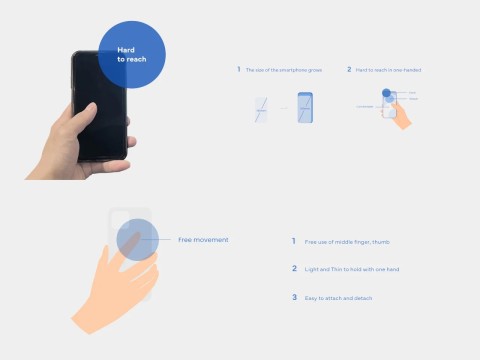
Now Poinf presents is only a concept. It is difficult to say whether this device will ever go on sale.